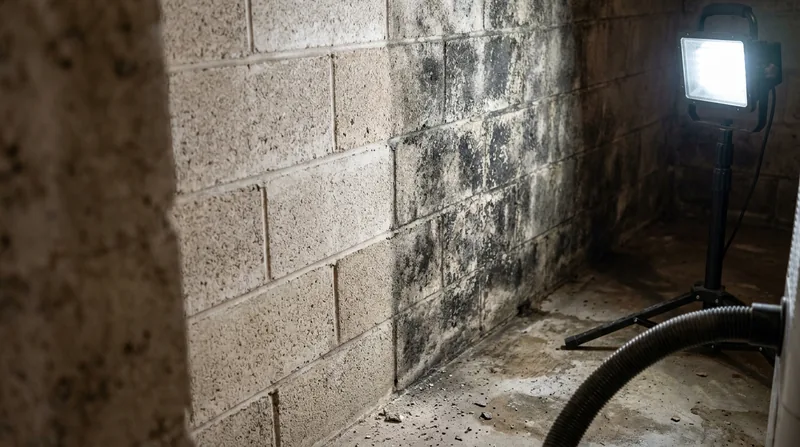




Basement Mold Remediation in Tulsa: Fix the Moisture, Then Remove the Mold
Tulsa sits on clay over Pennsylvanian shale and sandstone, and that clay swells when wet and shrinks in drought. When spring thunderstorms roll through or a sump pump fails during a heavy rain, water pushes against old brick, stone, and block foundation walls in Maple Ridge, Brookside, and Swan Lake homes that actually have basements. Basement Mold Remediation in Tulsa means two things done in the right order: remove the mold growth and fix the moisture source that feeds it. We handle both, from containment and surface treatment to the drainage and dehumidification that keep it from coming back. If you smell that musty odor every time you go downstairs, start with a free basement inspection before you spend a dollar on remediation.
Why Basement Mold Remediation Matters in Tulsa's Older Basement Homes
Most of the metro is slab-on-grade, so basements are uncommon here. The ones that exist are mostly in 1910s to 1940s Tudor, Art Deco era, and Craftsman homes in the central neighborhoods, plus some 1950s to 1970s brick ranches and split-levels in south and east Tulsa. Those old foundation walls seep, and the humid summers keep interior relative humidity high enough for mold to colonize drywall, joists, and stored belongings. Remediation without moisture control is a temporary fix.
- We look for efflorescence and white mineral bloom on block walls, which tells us water is moving through the masonry.
- We check the sump basin and discharge line, because a failed pump during a storm is the single most common trigger we see.
- We test for musty odors in closets and behind finished walls where mold grows out of sight.
- We inspect window wells along the older central homes, since a clogged well directs water straight at the foundation.
Once we know where the moisture is coming from, we can tell you plainly whether simple crack sealing is enough or whether hydrostatic pressure calls for an interior drain tile system.
Key info: A 1920s Brookside home we inspected had mold on the lower two feet of a finished wall. The cause was a clogged window well drain, not a failed foundation. Clearing and re-grading the well solved the moisture problem before we treated the wall.
For official guidance on moisture and mold in buildings, the U.S. EPA maintains a plain-language resource at epa.gov/mold.
How We Run Basement Mold Remediation in Tulsa
We do not fog a basement and call it done. Our process starts with finding the water path, because mold returns within weeks if the moisture source stays active. We set up containment, remove or treat affected materials, and then correct the drainage or humidity problem that allowed growth in the first place. The order matters, and we explain each step before we start.
- We walk the basement and document moisture readings, efflorescence, and visible growth with photos.
- We trace the source: wall seepage, a failed sump pump, a backed-up drain tile, or high humidity with no direct leak.
- We set up containment and negative air pressure so spores do not spread to the rest of the house during removal.
- We remove porous materials that cannot be cleaned and treat structural surfaces with an appropriate antimicrobial.
- We correct the moisture source, which may mean a sump pump installation, drain tile repair, or wall sealing.
- We verify dryness with a moisture meter before we close out the job.
Every job ends with a written summary of what we removed, what we treated, and what we changed to keep the basement dry.
Key info: In a 1960s split-level in Sand Springs, the mold was on the back of the lower-level drywall. The real problem was a footing drain that had silted shut. We repaired the drain tile and replaced the affected drywall rather than treating the same wall twice.
Remediation and moisture control methods we use
| Approach | Description | Best for |
|---|---|---|
| Containment and HEPA vacuuming | Seal the work area, filter the air, and remove settled spores from surfaces. | Visible surface mold on joists, walls, and stored items. |
| Antimicrobial treatment | Apply a treatment to structural surfaces after removal and cleaning. | Block and brick walls with recurring growth. |
| Sump and drainage correction | Repair or replace the pump, check valve, and discharge line so water leaves the foundation. | Mold that appears after every heavy rain. |
| Dehumidification | Control interior humidity during Tulsa's humid summers when no direct leak is present. | Musty odor with no visible water intrusion. |
| Wall sealing and crack injection | Stop active seepage through block mortar joints and poured wall cracks. | Efflorescence and damp walls in older central Tulsa homes. |
We pick the lightest method that solves the actual problem, and we tell you when a cheaper fix will hold.
Basement Mold Remediation Cost in Tulsa: What to Expect
Most basement mold remediation jobs in Tulsa start around $1,500, and that figure covers a contained work area with surface treatment and a moisture correction. Small jobs, like a single wall section behind a failed downspout, can land near that starting point. Larger jobs climb from there, and the drivers are predictable: square footage affected, whether finished drywall has to come out, how many rooms are involved, and whether the moisture fix is a simple crack seal or a full interior drain tile installation. Getting two or three written estimates is smart, because the scope of "remediation" varies widely between contractors.
We put the full breakdown on our pricing page so you can compare line items instead of lump sums. A Bixby homeowner with a finished basement and a failed sump pump will pay more than a Sapulpa ranch with an unfinished block wall, and that is normal. What should not vary is the contractor telling you exactly what the moisture source is before quoting a number.
Hiring a Basement Mold Remediation Contractor Near Me in Tulsa: What to Check
When you search for basement mold remediation near me in Tulsa, you will find general handymen, restoration franchises, and waterproofing specialists. Ask each one the same questions and compare the answers, not the sales pitch. A contractor who cannot explain the moisture source in plain language is guessing, and guessing is expensive.
- Confirm the company is licensed and insured, and ask for a certificate of insurance before work begins.
- Get at least two or three written estimates that list containment, removal, treatment, and moisture correction as separate lines.
- Ask for local references from Tulsa area homes with basements, since slab-on-grade experience does not translate.
- Ask who pulls any permit required for drainage or structural work, and verify the rule with the City of Tulsa building department because thresholds vary.
- Check HOA requirements in newer subdivisions like Owasso and Jenks before exterior drainage changes are made.
If a contractor will not put the scope and the moisture fix in writing, keep looking. You can reach us through the contact page to schedule a walkthrough at (918) 992-3422.
Basement Mold Remediation in Tulsa: Pricing Guide
| Service | Price | Details |
|---|---|---|
| Surface mold treatment (single area) | Starting at $1,500 | Containment, HEPA vacuuming, antimicrobial treatment, and moisture readings for one affected wall or room section |
| Mold removal with finished drywall | Starting at $2,400 | Includes removal of affected drywall, containment, treatment of framing, and disposal, priced by square footage |
| Remediation plus drainage correction | Starting at $3,200 | Combines treatment with sump repair, crack injection, or drain tile work so the moisture source is actually fixed |
| Whole-basement remediation | On estimate | Multiple rooms, finished ceilings, or widespread growth need an on-site look before we quote a number |
| Travel | Included | In Tulsa and surrounding areas, no separate call-out or mileage fee |
| Estimate | Free | Response within 24h at (918) 992-3422, no obligation to book |
Indicative pricing, the exact cost depends on square footage, finish, and site access. Free personalized estimate within 24h at (918) 992-3422.


