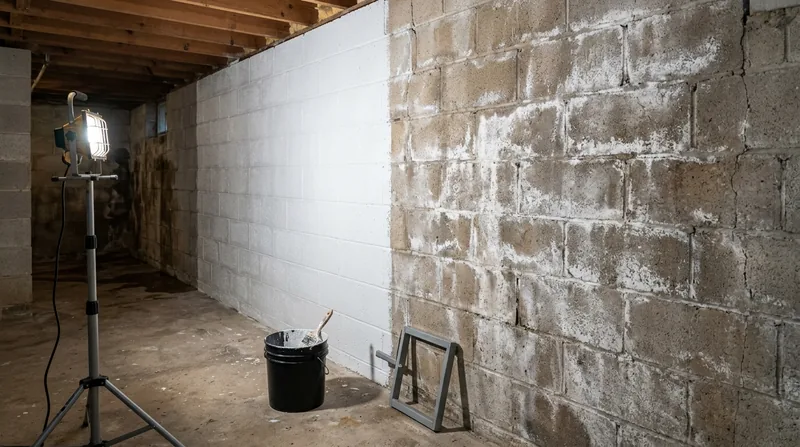




Tulsa sits on clay over Pennsylvanian shale and sandstone, and that clay swells when it soaks and shrinks when the summer dries it out. For the 1910s to 1940s brick and stone homes in Maple Ridge, Brookside and Swan Lake, that movement shows up as damp block walls, chalky white efflorescence, and slow seepage after a spring storm. Basement Wall Sealing in Tulsa is the first honest step for many of those walls: clean the surface, kill the mineral bloom, and seal the masonry against everyday moisture. We tell you up front whether a sealer will actually solve your problem or whether the water is being pushed in by hydrostatic pressure and needs a drain instead. Call (918) 992-3422 and we will look at the wall before we sell you anything. Start with our basement waterproofing overview if you are still sorting out what kind of leak you have.
Why Basement Wall Sealing Matters on Tulsa's Clay and Shale
Most of the metro is slab-on-grade, so the basements we seal are concentrated in the older central neighborhoods and in the 1950s to 1970s brick ranches and split-levels with partial basements across south and east Tulsa, Sand Springs and Broken Arrow. Those walls are brick, stone or block, often with original parging that has gone chalky and cracked. Tulsa's heavy spring thunderstorms drive water into the soil faster than clay can drain it, and the wall takes the pressure.
- Efflorescence means water is moving through the masonry and leaving mineral salts behind, not that the wall is dirty.
- Hairline cracks in block mortar joints let in dampness long before you see a puddle on the floor.
- Damp walls raise basement humidity, which is a moisture control issue and a common starting point for mold growth on framing and stored goods.
- Sealing buys time and stops surface dampness, but it will not hold back a rising water table.
Sealing is the right call when the wall is damp and chalky but the floor stays dry through a hard rain.
Key info: A 1920s Tudor in Maple Ridge with block walls and white bloom at the base usually needs cleaning and a breathable sealer, not excavation. A ranch in Broken Arrow with water standing along the cove joint after every storm is a drainage problem, and a sealer there only traps moisture in the wall.
For the code side, check with the City of Tulsa building department before any work that alters drainage or foundation structure, since rules vary by jurisdiction.
How We Seal a Basement Wall in Tulsa, Step by Step
We start by reading the wall, not by opening a bucket. A moisture meter and a look at the cove joint, the window wells and the floor tell us whether the dampness is surface condensation, capillary pull through the masonry, or water being pushed by the water table. That decides the product and the prep. If the wall is bowing or the crack is structural, sealing is not the answer and we say so.
- We inspect the wall, the footing line and the grading outside, and note where downspouts dump against the foundation.
- We wire-brush and scrape loose parging, old paint and efflorescence, then wash and let the masonry dry.
- We route and fill active cracks with a hydraulic cement or polyurethane patch before any coating goes on.
- We apply the sealer, either a penetrating silicate that soaks into the block or a flexible membrane for walls that need a film.
- We extend downspouts and correct grading so roof water runs away from the wall instead of back into the clay.
Every job ends with a walkthrough so you know what the sealer can and cannot do.
Key info: On a 1960s split-level in Sand Springs, the block wall was damp but the floor was dry. Cleaning and a penetrating sealer solved it. On a Jenks hillside build, the same symptom traced to a failed footing drain, and we moved the homeowner to interior drain tile instead of coating a wall that would stay wet.
Sealing Methods We Use and When Each One Fits
No single product seals every Tulsa wall. Brick, stone, poured concrete and block each behave differently, and a wall under pressure needs a different answer than a wall that is simply damp. Here is how we match the method to the wall.
| Approach | Description | Best for |
|---|---|---|
| Penetrating silicate sealer | Soaks into block and brick and reacts with the lime to close the pores without a film. | Damp, chalky block walls in older central Tulsa homes. |
| Flexible membrane coating | Bridges hairline cracks and stays elastic through the freeze-thaw cycle. | Poured walls with fine shrinkage cracks. |
| Crack injection | Epoxy or polyurethane pushed through injection ports to fill a crack full depth. | Active leaks and structural cracks before sealing. |
| Parging repair | Replaces failed mortar coat so the sealer has a sound surface to bond to. | Stone and brick walls with crumbling original parging. |
We recommend the least invasive method that actually addresses the water source, and we tell you when sealing alone will not hold.
Basement Wall Sealing Cost in Tulsa: What to Expect
Most basement wall sealing jobs in Tulsa start around From $1,500 for a single wall or a small basement with straightforward prep. The number moves with wall length and height, how much efflorescence and failed parging has to come off, whether cracks need injection first, and access. A stone wall in Brookside with crumbling mortar takes more labor than a clean block wall in a 1970s ranch.
Waterproofing us pricing also depends on what we find behind the wall. If the inspection shows hydrostatic pressure, the honest quote may be for an interior perimeter drain rather than a sealer, and we will say that before you spend money on a coating. Get two or three written estimates and compare scope, not just the total. Our pricing page lays out the ranges in more detail.
Hiring a Basement Wall Sealing Contractor Near Me in Tulsa
Ask three things before you sign: is the company licensed and insured, will they put the scope in writing, and can they explain why they chose a sealer over a drain. A contractor who seals every wall without checking the cove joint or the grading is guessing. Ask for references from Tulsa-area homeowners with the same wall type as yours.
Permits matter for structural foundation repair, egress window cutting and work that alters drainage or the sanitary connection of a sump discharge, and thresholds vary by jurisdiction, so confirm with the City of Tulsa building department. If your home is in a historic district or an HOA, check those rules too. Reach us through the contact page to schedule a look at the wall.
Basement Wall Sealing in Tulsa: Pricing Guide
| Service | Price | Details |
|---|---|---|
| Single wall sealing | Starting at $1,500 | Includes cleaning, efflorescence removal and one coat of sealer on a standard wall. |
| Full basement sealing | Starting at $2,800 | Covers all accessible walls; price rises with height, parging repair and crack count. |
| Crack injection before sealing | Starting at $450 | Epoxy or polyurethane injection on active cracks, priced per crack and depth. |
| Complex or large-scale job | On estimate | Stone walls, heavy parging failure or suspected hydrostatic pressure need an on-site look first. |
| Travel | Included | In Tulsa and surrounding areas, no separate call-out or mileage fee. |
| Estimate | Free | Response within 24h at (918) 992-3422, no obligation to book. |
Indicative pricing, the exact cost depends on square footage, finish, and site access. Free personalized estimate within 24h at (918) 992-3422.


