



Vapor Barrier Installation in Tulsa: Stop Ground Moisture Before It Reaches Your Living Space
Tulsa sits on expansive clay over Pennsylvanian shale and sandstone, and that clay moves hard between wet springs and droughty summers. In older central neighborhoods like Maple Ridge, Brookside, and Florence Park, the 1910s to 1940s brick and stone homes often have full or partial basements with original block or stone walls that wick ground moisture straight through the masonry. We install vapor barrier installation in Tulsa to block that vapor at the wall and slab, seal the seams tight, and tie the system into the drainage you already have. If your lower level smells musty after a rain or the walls sweat in July, the moisture is coming through the building materials, not the air. Call (918) 992-3422 for a free basement inspection and a straight answer on what you actually need. Start with our basement waterproofing service to see how vapor control fits the full picture.
Why Vapor Barrier Installation Matters in Tulsa's Clay and Shale Ground
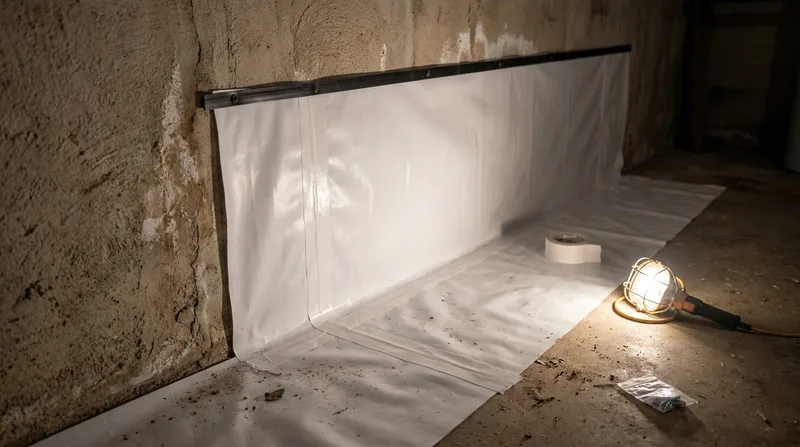
The dominant failure here is hydrostatic pressure and capillary wicking through old brick, stone, and block foundation walls, not a high water table alone. That clay holds rainfall from spring thunderstorms and pushes moisture vapor inward all summer. Without a barrier, that vapor condenses on cool basement surfaces and feeds mold growth on framing and stored goods. A heavy-duty sheet membrane with sealed seams and taped terminations cuts that path off at the source.
- We block vapor migration through foundation walls and slab edges before it reaches finished surfaces.
- We seal every seam and termination with compatible tape so the barrier stays continuous.
- We integrate the barrier with your sump basin and interior perimeter drain so water and vapor are handled together.
- We leave the wall assembly able to dry in the right direction instead of trapping moisture behind plastic.
This is moisture control at the building-material level, and it is the difference between a basement that stays usable and one that smells like wet dirt every June.
Key info: In a 1920s Brookside home with a stone foundation, we commonly find efflorescence and damp wall faces even when no standing water shows. That is vapor wicking, and a properly sealed barrier is the right first move once drainage is addressed.
For permit questions on work that alters drainage or sump discharge, verify requirements with the City of Tulsa Development Services before work begins.
How We Install Vapor Barriers in Tulsa Basements
We start by finding where the moisture is actually coming from, because a barrier over an active leak just hides it. On a 1950s brick ranch in east Tulsa, that might mean checking the footing drain and wall base before we ever hang sheeting. We map the walls, the slab, the sump, and the penetrations, then build the barrier to fit that specific geometry.
- We inspect the basement and identify wicking, seepage, and any active water entry points.
- We correct drainage issues first, including sump and drain tile problems, so the barrier is not fighting standing water.
- We clean and prep the wall and slab surfaces so the membrane bonds and sits flat.
- We install heavy-duty barrier sheets with overlapping seams and mechanical fastening where required.
- We tape and seal all seams, terminations, and penetrations, then tie the barrier into the sump basin.
- We test the assembly and walk you through what to watch for after heavy rain.
The sequence matters more than the material. A barrier installed over a failed drain is a waste of money, and we say so on the estimate.
Key info: A Jenks hillside home with a partial basement had damp walls every spring despite a working sump. The fix was a sealed barrier tied into the existing interior drain tile system, not another pump.
Vapor Barrier Approaches We Use in Tulsa Homes
Not every basement needs the same barrier. The right approach depends on wall material, whether the space is finished, and how the drainage is set up. Here is how we match method to condition.
| Approach | Description | Best for |
|---|---|---|
| Wall sheet barrier | Heavy-duty sheeting fastened to the wall with sealed seams and taped terminations. | Damp brick, stone, or block walls with wicking but no active seepage. |
| Slab and cove barrier | Barrier laid across the slab and sealed at the wall-floor joint. | Unfinished basements with slab moisture and musty odor. |
| Sump-integrated barrier | Barrier tied into the sump basin with sealed penetrations and a check valve setup. | Basements with active drainage and a sump pump. |
| Dimple board assembly | Drainage mat against the wall with a barrier layer to direct water to the base. | Walls with heavier moisture load and interior drain tile. |
| Repair and reseal | Patch failed sections, reseal seams, and restore terminations. | Existing barriers that have torn or lost their seal. |
We pick the assembly based on what the walls and drainage actually tell us, not a one-size template.
Vapor Barrier Installation Cost in Tulsa: What to Expect
Pricing starts from $3 per square foot for barrier work, and that figure moves with wall condition, access, and how much drainage correction is needed first. A clean unfinished basement in a Bixby ranch is a different job than a 1930s Swan Lake home with a stone foundation that needs prep and sump integration. Square footage is only one factor, and it is rarely the one that decides the final number.
- Wall material and condition drive prep time, since old stone and brick need more surface work than poured concrete.
- Access matters, because tight stairs and low headroom slow every step of the install.
- Drainage corrections, including sump or drain tile repair, are priced separately when they are needed.
- Finished basements require more careful protection and detail work around framing and utilities.
Get two or three estimates and compare what is actually included, not just the bottom line. Our full pricing overview lays out how we build a number.
Choosing a Vapor Barrier Contractor Near Me in Tulsa
Ask direct questions before you sign anything. A contractor who cannot explain why your basement is damp, separate from what they plan to sell you, is not the right call. Vapor barrier work is simple in concept and easy to get wrong at the seams and terminations.
- Confirm the company is licensed and insured and ask for a certificate before work starts.
- Get multiple written estimates that list materials, prep, and drainage work separately.
- Check references on basements similar in age and wall type to yours.
- Ask who pulls any required permit and verify the rule with your local building department.
- Ask how seams, penetrations, and sump tie-ins are sealed, since that is where barriers fail.
We answer those questions on the first visit, and we tell you when a simpler repair is enough. Reach out through our contact page to schedule a free inspection.
Vapor Barrier Installation in Tulsa: Pricing Guide
| Service | Price | Details |
|---|---|---|
| Wall sheet barrier | Starting at $3/sq ft | Includes surface prep, heavy-duty sheeting, sealed seams and taped terminations on accessible walls. |
| Slab and cove barrier | Starting at $3.50/sq ft | Includes slab coverage and a sealed wall-floor joint; finished areas add protection and detail time. |
| Sump-integrated barrier | On estimate | Priced after we confirm sump condition, discharge routing, and whether drain tile repair is needed first. |
| Dimple board assembly | On estimate | Quoted per wall after moisture load and interior drain tile layout are measured on site. |
| Travel | Included | In Tulsa and surrounding areas, no separate call-out or mileage fee. |
| Estimate | Free | Response within 24h at (918) 992-3422, no obligation to book. |
Indicative pricing, the exact cost depends on square footage, finish, and site access. Free personalized estimate within 24h at (918) 992-3422.


